
Social media is attractive to teenagers – and addictive (see Prof. Dr. Martin Korte, TU Braunschweig, F.A.Z. 09/03/26).
BUT: Audio is more precise than social ads, more emotional than display advertising, reaches the under‑20s where social media cannot – and builds familiarity, local connection and trust.
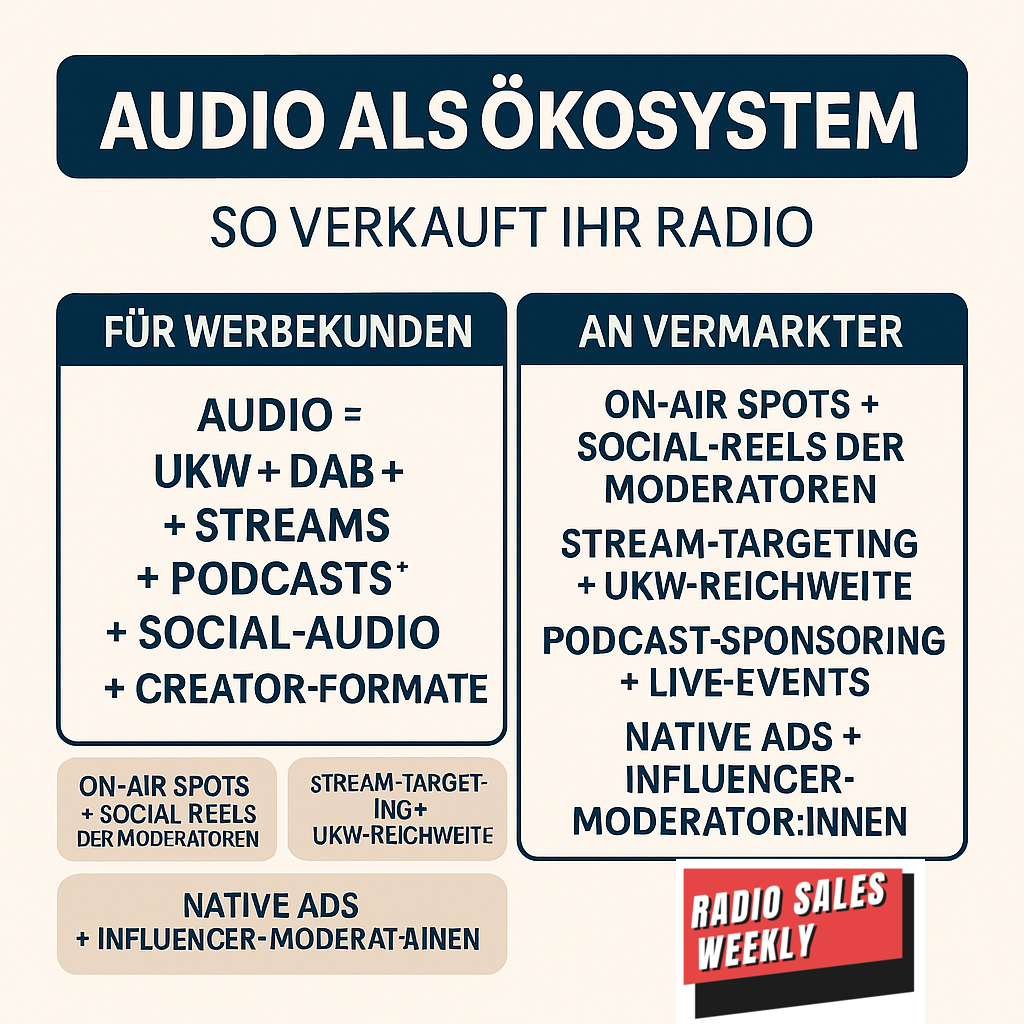
Our perspective: Audio as an ecosystem
FM/AM + DAB+ + Streams + Podcasts + Social Audio + Creator formats.
Audio continues to gain new usage situations and touchpoints.
For marketers: Create combination products
On‑air spots + hosts’ social reels · stream targeting + FM reach · podcast sponsorship + live events · native ads + influencer hosts.
#RadioSalesWeekly #Audio #Radio #DABplus #Podcast #SocialAudio #MediaPlanning #Advertising
Why social media is more attractive to children and teenagers than radio
Because it provides:
- instant, personalized social rewards
- dopamine-driven feedback loops
- identity formation and social comparison
- visual and interactive stimulation
- strong alignment with neurodevelopmental phases
- constant availability
- parental modeling
Radio fulfills almost none of these needs — it is a linear, passive medium that offers neither social feedback, nor visual stimuli, nor interaction.
Radio marketing faces a paradox
Young audiences are drifting away.
BUT: Audio as a whole remains extremely strong — especially among high‑income households and working adults.
For media sales, this means: radio must reposition strategically to continue offering advertisers high reach, clear target groups and strong impact — while also developing new audio formats that do not replace social media, but complement it.
Under‑20s live on social media — but they listen in audio.
Audio reaches them where they truly pay attention:
while studying, gaming, working out and on the move.
With creator voices, short formats and digital targeting, audio becomes the most effective gateway to Gen Z.