Nearly a century of communication history reveals striking parallels between propaganda, classic advertising, and today’s digital marketing. While tools have evolved—from radio to TikTok—the underlying mechanisms of persuasion remain surprisingly constant: emotion, storytelling, and simplification.
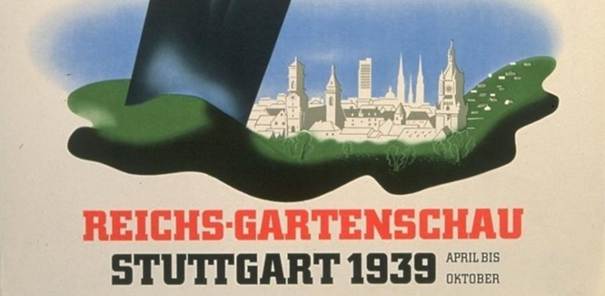
Kunstbibliothek Reichs- Gartenschau
1933–1945: Propaganda as Perfected Mass Communication
Under Joseph Goebbels, the Reich Ministry of Public Enlightenment and Propaganda controlled press, radio, film, and advertising. Its mission: shape the “Volksgemeinschaft” through ideology and entertainment.
Technologies and Media
- Radio (Volksempfänger): Millions of subsidized devices brought propaganda into homes.
- Film and Cinema: Sound film replaced silent film; iconic productions like Triumph of the Will defined the regime’s image.
- Posters: Strong visual codes, simple messages, centralized control.
- Early Television: Experimental broadcasts before 1945, but minimal reach.
Techniques
- Emotional Levers: Fear, enthusiasm, belonging.
- Simplification: Clear enemy images, short messages.
- Repetition and Symbolism: Memorable signs, strategic staging.
Propaganda units accompanied the Wehrmacht, producing material for newsreels and radio reports—a vital link between front and home.
Postwar Era and the 1950s: From Reconstruction to Consumer Society
After 1945, advertising structures had to be rebuilt. Radio advertising resumed in 1949, often via external studios. Many professionals—copywriters and sound engineers—came from former propaganda departments, now applying their skills to commercial work.
Media and Technologies
- Print: Magazines and newspapers dominated.
- Radio: Nearly universal household penetration.
- Television: First commercials appeared mid-1950s, inspired by U.S. storytelling and animation.
- Posters: Continued strong presence.
Advertising Strategies
- Shift from “Reklame” to “Werbung” as a signal of modernity.
- Targeted messaging for housewives, men, and children.
- Memorable slogans: “Greife lieber zur HB”, “Persil – und sonst gar nichts.”
- Early sexualization in ads by the late 1950s.
The American Influence and Frankfurt’s Rise
Global agencies like Ogilvy & Mather, McCann Erickson, JWT, and Young & Rubicam introduced U.S. concepts: TV spots, brand storytelling, and market research. Frankfurt emerged as Germany’s advertising hub, supported by banking, international connectivity, and major clients.
The Role of the “Consultants”
Radio advertising in West Germany did not resume until 1949/1950.
After the ban on propaganda structures, new forms of advertising had to be developed. Many broadcasting stations (including hr, BR, NWDR) worked with external production companies.
Numerous copywriters and sound engineers came from Nazi propaganda departments.
Where did the advertising professionals of the 1950s come from?
Press and media specialists from the Nazi era.
Before 1945, many had worked in the following areas:
- Illustrated magazines and mass press
- Reich broadcasting
- Film production (Ufa, Tobis, etc.)
- Graphic studios and poster art
- Advertising departments of major corporations
These activities were not automatically Nazi propaganda, but they belonged to the same professional field as advertising: design, text, visual language, mass impact.
After 1945, they often reappeared in small, privately founded studios—frequently with Eastern European-sounding names, as many advertising professionals came from Vienna, Prague, Budapest, or the Sudetenland.
An Example
When Advertising Learned to Speak: Memories from the 1950s
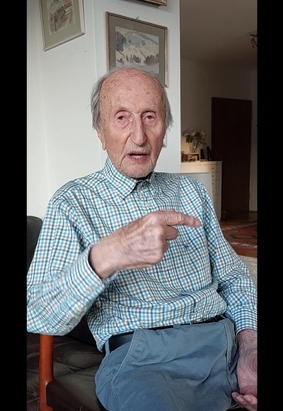
“We produced the first radio spots almost like little radio plays,” recalls a now 102-year-old former editor at Hessischer Rundfunk in Frankfurt. In the early 1950s, he was part of a team shaping the return of advertising to German radio after the war. The studios were improvised, the technology simple—but the ideas were big.
Watch his report on how he produced radio spots in the 1950s:
Unnamed testimonial: privacy and dignity
One of the defining figures of that era was Horst Slesina. He began as a copywriter and sound engineer and later became a key figure in the industry. Slesina from Offenbach merged with the U.S. agency Bates, introduced American marketing methods to Germany, and organized campaigns for brands like Rowenta. His work marked the transition from classic “Reklame” to modern brand communication—with emotional messages, catchy slogans, and the use of new media.
What began in a radio studio was the start of an era: advertising as staging, as experience—and as a driving force behind the economic miracle.

Product Catalog
Continuities and Change
Despite technological leaps, persuasion techniques remain timeless:
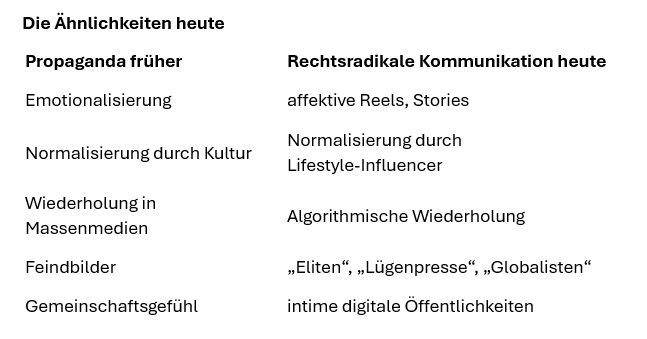
- Emotions: Then fear and enthusiasm; now closeness and identification.
- Storytelling: From cinema to Instagram reels.
- Segmentation: Once crude; now algorithmically precise.
Key Differences Today
- Interactivity: Social media replaces one-way communication.
- Speed: Global reach in seconds.
- Technology: AI, micro-targeting, real-time optimization.
- Values: Diversity and sustainability over traditional roles.
Digital Platforms: New Propaganda Machines?
TikTok, YouTube, Instagram, and X reward polarization and emotionalization. Political influencers exploit this logic with short clips, strong emotions, and clear enemy images—amplified by algorithms.
Solution: Media literacy. Recognize mechanisms, name emotions, pause before sharing. Tools change; techniques endure.
Structural Parallels Across Eras
- Professionalization of persuasion: technique dominates content.
- Emotional mechanisms remain timeless.
- Collective narratives: from “Volksgemeinschaft” to brand identity.
- Media dominance: radio and cinema then; algorithms and platforms now.
- Simplification: from slogans to memes and 10-second videos.
From Propaganda to TikTok: What Has Really Changed?”
As an intern at J. Walter Thompson, one was once tasked with writing about ‘Advertising in the Nazi era.’ Today, almost half a century later, we see: the tools have changed, but the mechanisms remain strikingly similar—emotions, storytelling, simplification.
👉 What can we learn from this? Media literacy is more important than ever.”

Wiki
The Future of Advertising
Traditional media revenues decline as digital channels dominate. Consumers switch brands faster, driven by price, choice, and transparency. Loyalty is harder to maintain. Digital democratization empowers small brands through social media and influencer marketing.
What’s required today?
- Authenticity and multichannel presence.
- Higher budgets and integrated strategies.
- Credible brand narratives to cut through the noise.
Key Takeaways
- Stay alert: Media and marketing evolve rapidly.
- Be flexible: What works today may be obsolete tomorrow.
- Think critically: Resist manipulation—whether in advertising, politics, or social media.
The future belongs to those who recognize change and shape it. Stay curious, stay critical, and don’t be dazzled by big names or quick promises.
Recommended Reading
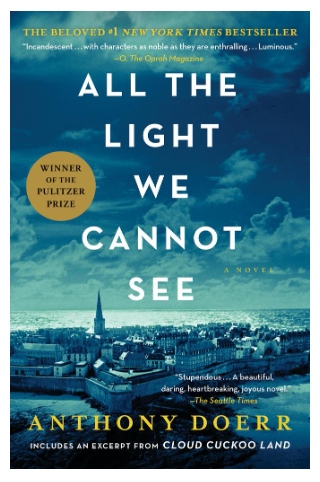
All the Light We Cannot See by Anthony Doerr – a novel about humanity and communication in dark times.
Special thanks go to
Wolfgang Fallmer, ex-JWT, Joachim John, ex-RadioTeleMedia-Service, Michaela Merz, germany.net, Martin Schmitz, ganzmuenchen.de, Dr. Rüdiger Fett, UWI, Rainer H.G. Kellerer MedienBulletin und Radio Petticoat, Reinhard Koch, zuvor Hessischer Rundfunk.
#Mediengeschichte #WerbungImWandel #KommunikationGesternUndHeute #MarketingHistorie #PropagandaUndWerbung #DigitaleTransformation #StorytellingImMarketing #Medienkompetenz #RadioSalesWeekly